

What Are the Essential Daily Maintenance Tasks for a Mechanical Press?
Essential daily maintenance tasks for a mechanical press include visual safety inspections, lubrication checks, cleaning debris from work areas, and verifying the proper operation of safety systems before starting production. These routine checks prevent costly breakdowns and ensure operator safety.
Start each shift by conducting a thorough visual inspection of the press structure, looking for any obvious damage, loose bolts, or unusual wear patterns. Check that all safety guards are properly positioned and secure, and test emergency stop systems to ensure they function correctly. This initial assessment helps identify potential issues before they escalate into major problems.
Lubrication system monitoring is another critical daily task. Verify that automatic lubrication systems are functioning properly and check oil levels in reservoirs. Clean any accumulated metal chips, dust, or debris from the work area, as these contaminants can interfere with proper operation and create safety hazards. Document any observations in your maintenance log to track patterns over time.
How Often Should You Service Different Components of a Mechanical Press?
Different mechanical press components require servicing on varying schedules: clutch and brake systems need weekly attention, drive motors and gearboxes require monthly checks, and major structural components should be inspected quarterly. Following a structured press maintenance schedule prevents unexpected failures.
Weekly maintenance focuses on high-wear components that directly impact press operation. Inspect clutch engagement mechanisms for proper adjustment and wear, check brake lining condition, and verify that flywheel operation remains smooth. These components experience significant stress during each cycle and require frequent monitoring to maintain reliable performance.
Monthly servicing expands to include drive system components and electrical systems. Check motor bearings for unusual noise or vibration, inspect belt tension and condition, and verify the proper operation of control systems. Quarterly inspections should encompass structural elements such as frame alignment, foundation bolts, and major mechanical connections that support the entire press assembly.
What Are the Most Common Signs That Your Mechanical Press Needs Maintenance?
Common signs that a mechanical press needs maintenance include unusual noises during operation, inconsistent part quality, excessive vibration, and visible oil leaks around seals or connections. These symptoms often appear before complete component failure, providing an opportunity for preventive maintenance.
Abnormal sounds are one of the earliest warning signs of developing problems. Grinding, squealing, or knocking noises typically indicate bearing wear, insufficient lubrication, or misalignment. Changes in the normal operating rhythm or cycle timing can also signal potential clutch or drive system problems that require immediate attention.
Quality issues in formed parts often reflect press condition problems. Inconsistent part dimensions, surface defects, or incomplete forming may indicate worn tooling, inadequate press tonnage, or structural deflection. Increased vibration during operation suggests bearing wear, foundation problems, or component imbalance that needs professional evaluation to prevent further damage.
How Do You Properly Lubricate a Mechanical Press System?
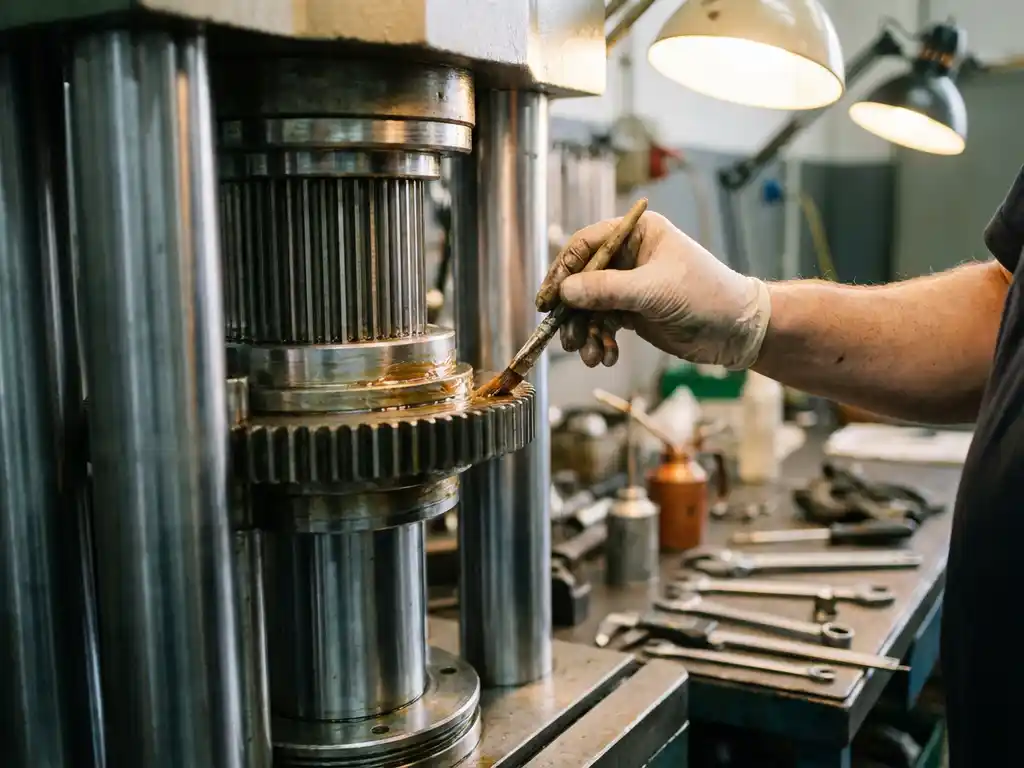
Proper mechanical press lubrication involves using manufacturer-specified lubricants, following established intervals for each lubrication point, and ensuring complete coverage of all moving components, including bearings, slides, and drive mechanisms. Correct press lubrication extends component life and maintains operational reliability.
Begin by consulting your press manual to identify all lubrication points and their specific requirements. Different components may require different lubricant types, such as high-temperature grease for bearings, way oil for slides, and hydraulic fluid for clutch systems. Use only lubricants that meet manufacturer specifications, as incorrect products can cause premature wear or system damage.
Establish a systematic approach to lubrication that covers all points consistently. Clean grease fittings before applying new lubricant to prevent contamination, and pump grease until clean lubricant appears at bearing seals. For oil systems, check levels regularly and change oil according to operating-hour recommendations or contamination levels rather than calendar intervals alone.
What Tools and Equipment Do You Need for Mechanical Press Maintenance?
Essential tools for mechanical press maintenance include precision measuring instruments such as dial indicators and micrometers, standard hand tools, lubrication equipment, and safety devices such as lockout/tagout materials. Specialized equipment may include bearing pullers, torque wrenches, and vibration analysis tools for comprehensive industrial press servicing.
Basic hand tools form the foundation of any maintenance toolkit. Include complete sets of wrenches, sockets, screwdrivers, and pliers in both metric and standard sizes. Torque wrenches are essential for proper bolt tensioning, while pry bars and hammers help with component removal and installation. Quality tools ensure work can be completed safely and efficiently.
Precision measurement tools enable accurate assessment of component condition and proper adjustment. Dial indicators help check runout and alignment, while micrometers and calipers verify dimensional specifications. Lubrication equipment should include grease guns, oil dispensers, and filtration systems to maintain lubricant cleanliness during routine servicing.
How H&T ProduktionsTechnologie Helps with Mechanical Press Maintenance
H&T ProduktionsTechnologie provides comprehensive maintenance solutions for mechanical press operations through engineered systems that prioritize accessibility and reliability. Our approach to mechanical press maintenance includes:
• Advanced mechanical press designs with strategically positioned service points for efficient maintenance access
• Comprehensive maintenance documentation and training programs to optimize your maintenance procedures
• Expert technical support for troubleshooting complex maintenance challenges
• Genuine replacement parts and components engineered to original specifications
Our maintenance-focused design philosophy ensures that routine servicing tasks can be completed quickly and safely, minimizing production downtime while maximizing equipment longevity. Contact our technical team today to learn how we can optimize your mechanical press maintenance strategy and improve your operational efficiency.
