

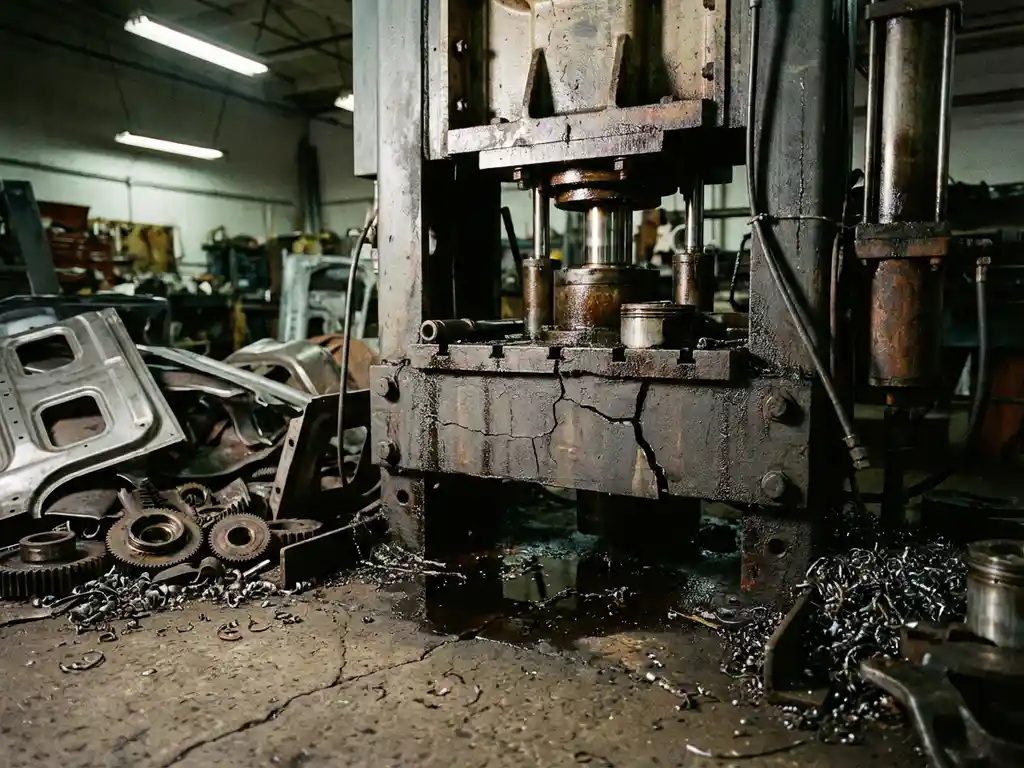
What Are the Main Speed Limitations of Mechanical Presses?
Mechanical presses face significant speed limitations due to their fixed stroke cycles and inability to adjust motion profiles during operation. Unlike servo spindle press technology or exzenter based servo press technology, mechanical systems operate at predetermined speeds that cannot be optimized for different forming operations, creating bottlenecks in high-volume production environments.
The fundamental constraint stems from the mechanical linkage system that drives these presses. Traditional mechanical presses rely on flywheels and clutch-brake systems that maintain constant cycling speeds regardless of the specific requirements of each forming operation. This inflexibility becomes particularly problematic when manufacturers need to switch between different products or optimize cycle times for varying material thicknesses.
Additionally, mechanical press limitations become more pronounced in applications requiring variable speed profiles throughout a single stroke. Modern metal forming often benefits from slower approach speeds for precise positioning, followed by rapid forming velocities—capabilities that mechanical systems simply cannot deliver. This restriction directly impacts overall equipment effectiveness and limits manufacturers’ ability to maximize throughput while maintaining quality standards.
Why Do Mechanical Presses Use More Energy Than Modern Alternatives?
Mechanical presses consume more energy because they operate continuously at full power regardless of actual production demands, while servo systems use energy only when needed. This constant energy consumption occurs often even during idle periods, material loading, and low-demand operations where reduced power would suffice.
The energy inefficiency stems from the flywheel-based design, which requires continuous motor operation to maintain rotational momentum. Even when the press isn’t actively forming parts, the motor continues running to keep the flywheel spinning at operating speed. This design philosophy made sense decades ago but represents a substantial disadvantage in today’s energy-conscious manufacturing environment.
Manufacturing press systems that use servo technology offer dramatic energy savings by providing power on demand. These systems can reduce energy consumption by up to 50% compared to mechanical alternatives because they eliminate the need for continuous flywheel operation. The servo motors draw power only during actual forming operations and can enter low-power standby modes during production pauses, making them increasingly attractive to cost-conscious manufacturers.
How Do Precision Limitations Affect Metal Forming Quality?
Precision limitations in mechanical presses result from their inability to control stroke position and forming force with the accuracy required for modern metal stamping applications. These systems cannot compensate for material variations, tool wear, or environmental factors that affect forming quality, leading to increased scrap rates and inconsistent part dimensions.
The mechanical linkage system inherently produces variations in bottom dead center positioning, which directly impacts part consistency. Unlike servo press technology, which provides precise position control throughout the entire stroke, mechanical systems rely on physical stops and mechanical tolerances that accumulate over time. This accumulated variation becomes particularly problematic in progressive die operations, where each station must maintain exact positioning relative to previous forming steps.
Furthermore, mechanical presses cannot adjust forming parameters in real time to compensate for material property variations within the same coil or batch. Modern metal forming often requires adaptive control to maintain consistent quality across varying material conditions, a capability that mechanical systems fundamentally cannot provide. This limitation forces manufacturers to accept wider quality tolerances or implement additional secondary operations to achieve the desired specifications.
What Makes Mechanical Presses Difficult to Adapt for Different Products?
Mechanical presses require extensive physical modifications and lengthy changeover procedures when switching between different products because their operating parameters are mechanically fixed rather than software-controlled. This inflexibility significantly increases changeover time and limits manufacturers’ ability to respond quickly to changing production demands or customer requirements.
The primary adaptation challenge lies in the mechanical adjustment requirements for stroke length, shut height, and timing parameters. Each product change typically requires manual adjustments to multiple mechanical components, including die height settings, stroke limiters, and timing mechanisms. These adjustments not only consume valuable production time but also require skilled technicians to ensure proper setup and safety compliance.
Press technology disadvantages become especially apparent in mixed-production environments where manufacturers need to switch frequently between different part geometries or material thicknesses. We have observed that companies using mechanical systems often batch similar products together to minimize changeover frequency, which can conflict with just-in-time manufacturing principles and customer delivery requirements. Modern servo-based alternatives eliminate many of these constraints by enabling rapid parameter changes through software programming rather than mechanical adjustments.
How H&T ProduktionsTechnologie Helps Overcome Mechanical Press Limitations
H&T ProduktionsTechnologie provides comprehensive solutions to address the fundamental limitations of mechanical press systems through advanced servo press technology and expert engineering support. Our approach focuses on transforming manufacturing efficiency while maintaining the reliability that modern production demands.
Our servo press solutions deliver:
- Variable speed control throughout the complete stroke cycle, optimizing forming parameters for each specific application
- Energy-efficient operation with up to 50% reduction in power consumption compared to mechanical alternatives
- Precise position and force control for consistent part quality and reduced scrap rates
- Software-based parameter adjustment for rapid changeovers between different products
- Real-time adaptive control to compensate for material variations and maintain quality standards
- But also ability to custom generate crank shapes on mechanical presses to fit your drawing operation
Ready to overcome the limitations holding back your production efficiency? Contact us today to discuss how our servo press technology can transform your metal forming operations and deliver the flexibility, precision, and energy efficiency your business needs to stay competitive.
